



Effects of incline and preacher curls on regional hypertrophy and strength
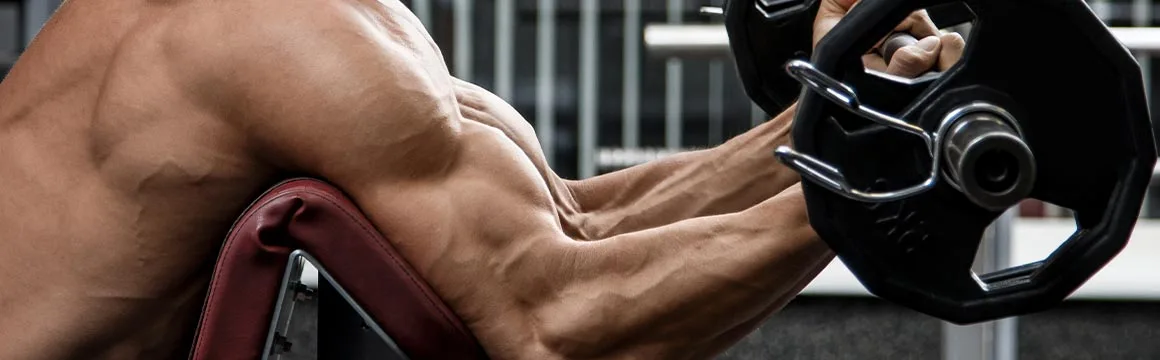
To develop muscle hypertrophy, training against external resistance remains the best way to achieve this. Hypertrophy is often the main goal of many practitioners and the primary reason why they start weight training. While many athletes seek to increase their muscle volume to improve their performance, gaining muscle mass is also very beneficial in fighting the effects of aging, sedentary lifestyles, physical inactivity, and many diseases. Between practical experience and scientific research, a consensus has been reached on the training and variables to be manipulated in order to maximize hypertrophy in all types of people.
In order to design a suitable training program and optimize muscle gains, many parameters must be taken into account: volume, frequency, muscle failure, tempo and rest between sets. The choice of exercises is also of paramount importance, as it will directly dictate the hypertrophic adaptations of the targeted muscles. However, in resistance training, the debate over the choice of exercises is long-standing and still very much alive. Should you increase the number of variations for the same muscle or, on the contrary, focus on a few “major” movements? The central hypothesis behind this question is that not all exercises work a muscle in the same way, and certain joint positions may promote specific adaptations, both in terms of strength and muscle development.
In recent years, scientific literature has gradually challenged the idea of uniform muscle hypertrophy. Several studies have shown that muscle growth can be regional, i.e., more pronounced in certain parts of the same muscle depending on the exercise performed, the joint angle, or the muscle length trained. The elbow flexors, and in particular the biceps brachii, a bi-articular muscle, are a preferred model for exploring this question. Among the most popular exercises, the incline curl and the preacher curl are distinguished by opposite shoulder positions, placing the muscle in very different lengths. How will these different anatomical configurations impact elbow flexors hypertrophy?
The study
To answer this question, researchers conducted a randomized controlled trial in young women who were not trained in strength training. Sixty-three participants, aged 18 to 35, were randomly divided into two groups: one performed only preacher curls (n=30), the other only incline curls (n=33), for eight weeks. Training was carried out twice a week, under supervision, with an intensity of between 8 and 12 maximum repetitions, each set being performed to momentary concentric failure.


Before and after the intervention, the muscle thickness of the elbow flexors (biceps brachii and brachialis) was measured by B-mode ultrasound at three distinct levels of the arm: at 50% (proximal), 60% (mid), and 70% (distal) of the distance between the acromial process of the scapula and the lateral epicondyle of the humerus. This approach allowed for a more accurate assessment of regional muscle adaptations, beyond a simple overall measurement. Strength was quantified using three-rep max (3RM) tests performed on both exercises to examine movement-specific strength gains.
Participants were asked to maintain their usual diet and lifestyle throughout the study. Training adherence was high in both groups, and training volumes progressed comparably, limiting biases related to total load or attendance. The entire protocol was thus designed to isolate the effect of exercise choice on muscle and neuromuscular adaptations.
Results & Analysis
The main results show that both exercises induce a significant increase in muscle size and strength, confirming their overall effectiveness in developing elbow flexors in untrained individuals. However, when adaptations are examined in more detail, regional differences emerge.
The incline curl is associated with a greater increase in muscle thickness in the proximal portion of the arm. This observation is consistent with the hyperextended shoulder position, which places the biceps brachii in a more stretched muscle length, particularly at its proximal insertion. Conversely, the preacher curl promotes greater development of the distal portion of the elbow flexors. This difference could be explained by the external force moment profile specific to each exercise, with greater stress at the beginning of the range of motion for the preacher curl, where the distal portion is subjected to higher mechanical stress.
On the other hand, the middle portion of the muscle appears to respond similarly to both exercises, suggesting that certain areas of the muscle are less sensitive to variations in joint position, or that they receive sufficient stimulus in both cases. The differences observed remain quantitatively modest, but they are consistent and statistically significant, which reinforces their physiological plausibility.
In terms of strength, the adaptations clearly follow the principle of specificity. Participants who trained with the preacher curl improved their performance more on this same exercise, while those who performed the incline curl progressed more on the incline curl.
Practical applications
The choice of exercises not only influences the strength developed, but can also impact the distribution of muscle growth, mainly in the case of multi-joint muscles. For practitioners whose goal is purely functional or health-oriented, these differences are probably secondary. However, for those seeking aesthetic optimization or specific adaptation, they become relevant. Alternating or combining movements that place the muscle in different lengths would allow all of its regions to be worked more evenly. This approach is in line with current recommendations that favor controlled variety of exercises rather than excessive specialization in a single movement.
And it is important to remember that stretching alone is not enough. In this study, with these participants, the incline curl, which stretches the biceps brachii at the elbow and shoulder, favored proximal regional hypertrophy, probably because the external force moment in the starting position is low.
However, the differences observed, although real, remain modest and were measured in a specific population over a relatively short period of time. They should not be overinterpreted as spectacular or indispensable effects. Progressive overload, proximity to failure, regularity, and total training volume remain the major determinants of hypertrophy and strength.
Finally, one of the limitations of the study is that it measured the muscle thickness of the elbow flexors without distinguishing between the biceps brachii and the brachialis. There are reasons to believe that the contribution of each muscle may differ. Indeed, the angle of elbow flexion at which the internal lever arm is greatest appears to differ between the biceps brachii and the brachialis, with a greater internal lever arm for the brachialis in the early degrees of full elbow extension. Therefore, future studies should consider measuring these muscles individually.
Reference
Kassiano W, Costa B, Kunevaliki G, Lisboa F, Stavinski N, Prado A, Tricoli I, Francsuel J, Lima L, Nunes JP, Silva Ribeiro A & Cyrino ES. Distinct muscle growth and strength adaptations after preacher and incline biceps curls. Int J Sports Med 2025, 46 (05) : 334-343.
